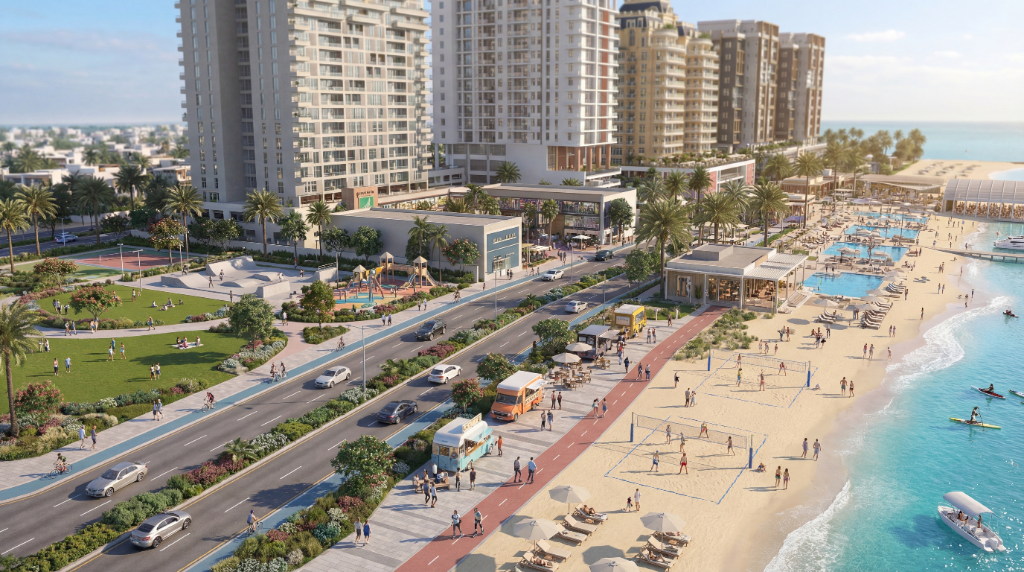
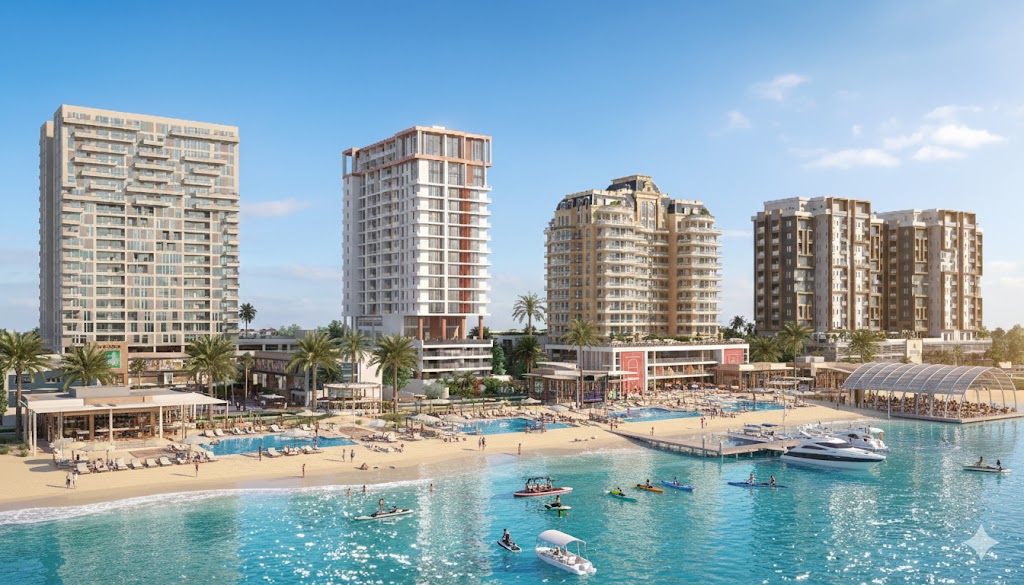
Carnelian Tower

The State of Real Estate in Nigeria

Eko Atlantic Development

Understanding the shift in Detty December demand and what it means for property owners

What you're describing is Detty December demand maturing: the diaspora audience is still there, but they're no longer tolerating "peak-season madness" pricing + unreliable service + brutal logistics. And that shift is hitting short-lets first.

1) Why some diaspora are scaling back Lagos (and why the ones who come are choosing hotels)

"Value-for-money" broke

A big theme coming out of Detty December 2025 coverage is that short-let operators pushed rates too far, and guests openly rejected it—choosing hotels instead.

Hotels feel safer because they offer:

  • Predictable service standards (front desk, housekeeping, security)
  • Less "host drama" (caution fees, slow response, surprise rules)
  • Better reliability (power/water backup as standard)
  • More accountability (brand reputation, management structure)
Families are optimizing for ease

Families don't just buy accommodation; they buy logistics:

  • Predictable check-in
  • Child-safe spaces
  • Quick access to activities
  • Minimal "what if light goes off?" risk

Once you add Lagos traffic—where December movement can take hours—families start looking at alternatives or choosing accommodations that reduce friction.

2) The traffic penalty: "Lagos time" became a hidden tax

Detty December gridlock isn't new, but as the season expanded and got more commercial, the time-cost became part of the decision equation: people spend too much of their holiday inside cars.

For a diaspora visitor, the question becomes:

"Why pay premium money… to then spend 3–4 hours getting to dinner, beaches, concerts, or family visits?"

So people now:

  • Stay closer to the exact event corridors
  • Reduce their itinerary
  • Or choose other cities/countries where movement is easier

3) Flights + total holiday cost: Lagos is failing the "holiday ROI" test

When flight prices surge and accommodation surges, Lagos stops competing with "holiday destinations" and starts competing with "premium cities"—without matching infrastructure convenience.

So the diaspora logic becomes:

  • "I can spend less and get more predictable quality in parts of Europe / Dubai / Cape Town / etc."
  • "Same money, better experience, less stress."

This is exactly how demand elasticity shows up: people don't stop traveling; they switch destinations.

4) Why peak season may stop being peak for short-lets

Short-lets used to win because peak season = high occupancy + high ADR. Now operators are discovering a nasty combo:

The Problem:

  • • They raise ADR aggressively
  • • Guests choose hotels
  • • Occupancy drops
  • • Peak season profitability compresses

The Reality:

The old model—"December will save me"—is becoming less reliable.

5) The long-let distortion: landlords want short-let money for long-let risk

Why this breaks the market

The Issue:

Owners are switching to long-term rentals but pricing them only slightly below short-let rates.

Why this is bad business:

  • • Long-let tenants compare to the long-let market, not hotel pricing
  • • Longer vacancy periods
  • • Weaker tenant quality
  • • Higher default/arrears risk
  • • Faster wear-and-tear conflict
  • • Downward renegotiations mid-lease

Why it harms "rent-to-shortlet" operators:

Rent-to-shortlet works only if there's a big spread between long-let rent and short-let revenue.

Result: The model collapses.

6) The honest conclusion: "rent-to-shortlet" (as a lazy model) is dead

Not "short-let is dead."

Lazy short-let is dead.

"Buy any unit, furnish it, take glossy photos, charge wild rates in December" is dead.

The winners now operate like hospitality brands, not landlords.

Way forward

The new playbook for owners who aren't profiting

A) Choose your lane (stop being in-between)

Lane 1: True hospitality short-let (premium ops)

You must earn your rate with:

  • Hotel-level housekeeping SOPs
  • 24/7 response
  • Power/water redundancy
  • Consistent linens/toiletries
  • Tight check-in/out process
  • Damage deposit policy that's fair + fast

If you can't run this like a business, don't do short-let.

Lane 2: Mid-let (the silent winner)

Target: corporate stays, relocations, projects, diaspora "work-from-Lagos" 1–6 months.

Benefits:

  • Fewer turnovers
  • More stable occupancy
  • Lower cleaning cost
  • Less guest drama
  • Stronger net margins than shaky nightly bookings

Lane 3: Long-let (stability strategy)

But you must price correctly:

  • Accept that long-let yields are lower
  • Focus on tenant quality + lease enforcement
  • Optimize maintenance
B) Fix pricing: stop "December anchoring"

Set rates using 3 layers:

1. Off-peak base rate

(must be profitable even at low occupancy)

2. Peak uplift

(reasonable, not insulting)

3. Event surge

(only for verified demand windows)

If you price like you're punishing guests, hotels will keep winning.

C) Upgrade only what moves the needle

Most short-lets lose reviews (and repeat business) due to:

• Power reliability

• Water pressure/heating

• Cleanliness

• Responsiveness

• Noise/security

Spend money on reliability + cleanliness + service, not fancy decor.

D) If you're stuck with a weak asset: reposition, don't pray

Options:

  • Convert to mid-let
  • Offer family-friendly packages (crib, high chair, safe balconies, backup power)
  • Partner with event planners and corporate HR for steady demand
  • Or sell and redeploy into a stronger node
E) Portfolio triage (quick rule)
  • •If your unit can't win on location + access + reliability, don't force short-let.
  • •If your area is traffic-punishing and far from the main corridors, you either:

→ Price lower and go mid-let, or

→ Go long-let, or

→ Exit.

Need Help with Your Portfolio?

Drop the locations you have (and unit types), current nightly rates / occupancy, expenses (power, staff, management), and we'll map each property into HOSPITALITY / MID-LET / LONG-LET / SELL, and give you a pricing band that prevents December from being your only profitable month.

Why "Nigeria real estate isn't profitable" *unless* you buy off-plan

Understanding why speculation confuses people and how to build a data-driven portfolio strategy

Eko Atlantic coastal development

What Off-Plan Really Gives You

Off-plan is profitable in Nigeria mainly because it bakes in a developer discount + time arbitrage:

  • You buy wholesale risk (construction, approvals, delivery risk), so you get a lower entry price.
  • As milestones are hit, the asset reprices upward even before the neighborhood truly improves.
  • In inflationary / FX-volatile environments, nominal prices rise fast, so early buyers appear to "win" simply by being earlier.

The "Unrealistic Market Indices" Problem

Nigeria's property "index" is often not a real index—more like headline pricing folklore. The distortions usually come from:

  • •Asking prices ≠ transaction prices. Many listings are optimistic anchors; few are verified closed deals.
  • •FX illusion. A house can go from ₦100m to ₦250m and look like "2.5x growth," while in USD/GBP terms it may be flat or down.
  • •Inflation illusion. Nominal gains that don't beat inflation aren't real gains; they're "money getting smaller."
  • •Thin markets + low transparency. With no robust, open transaction database/MLS, narratives travel faster than data.
  • •Rebasing/stat changes can muddy macro comparisons. Nigeria has periodically updated official statistics which affects how people interpret "growth."

Bottom line: In a speculative market, "index" is often a confidence metric, not a cashflow metric.

Why Short-Let ROI Fell from 50-70% to 4-10%

Short-let had a first-mover window where supply was low and demand was high. That window closed because:

A) Oversupply + Commoditization

Everybody copied the playbook: same furniture, same photos, same "luxury 1-bed." When supply grows faster than demand, occupancy and ADR fall. Lagos typical occupancy now clusters around 40-45%.

B) Operating Costs Exploded

Power (diesel/inverter), security, staff, laundry, replacements, management fees, internet—these costs rose hard. Even if revenue stays okay, net yield collapses.

C) Regulation + Estate Restrictions

Lagos has tightened compliance, liability, and taxation. Premium estates became stricter on security and guest policies, reducing bookable demand.

D) Demand Became Pickier

Guests compare dozens of units. Winners are location + experience + reliability (cleanliness, power uptime, water pressure, security, access).

Compare to Long-Let (2-4%)

Long-let yields sit low because rents adjust slower than inflation/FX, tenants negotiate hard, vacancy/arrears risk exists, and cap rates compress in "prestige" areas. Short-let came down toward "normal" ranges while long-let stayed structurally low—meaning capital appreciation and location selection matter more than ever.

Nigeria's Next 5-10 Years: Growth vs Decline Forces

Likely Growth / Tailwinds
Population + urbanization (demand pressure in productive cities/corridors)
Non-oil sectors and digital services increasingly reflected in economic structure
Real GDP growth expectations from major institutions remain positive
Likely Decline / Headwinds
Cost of capital remains a constraint; mortgage depth limited
Inflation and FX volatility risk remains a key swing factor
Fiscal pressure can crowd out private credit and reduce purchasing power

Practical implication: Real estate outperformance will concentrate where jobs, infrastructure, and access concentrate—not where vibes and billboards concentrate.

The "Way Forward" Framework

Location × Density × Mix-use × Connectivity × Infrastructure readiness

Think like a retailer + infrastructure investor, not like a trophy buyer.

1. Location (Define It Properly)

"Good location" is not a name (Ikoyi/Lekki). It's a demand engine: Who is the buyer/tenant/guest? What do they do for income? How stable is their demand in downturns?

2. Population Density of Target Audience

Not "people" — the right people: corporate clusters, diplomats/expats, diaspora traffic, universities, hospitals, ports, industrial parks, tech hubs.

3. Mix-Use Ratio

Pure residential zones without jobs/recreation become weekend dead zones (weak short-let, slow rent growth). Balanced nodes keep cashflow stable across cycles.

4. Accessibility + Connectivity

Your property competes on: commute time reliability, alternative routes, proximity to bridges/arterials, and "last-mile" quality (roads, drainage, security checkpoints).

The "42% Infrastructural Development Potato Score"

Infrastructure is like a potato—you can't price it as "fully ripe" when it's still hard and green.

Potato Score = "Infrastructure Readiness to Sustain Premium Pricing"

Score 0-100 across 5 buckets (20 points each):

1.Road access & travel time reliability (primary + alternate routes)
2.Drainage/flood resilience + shoreline protection (where relevant)
3.Power + water reliability (not just availability—uptime and redundancy)
4.Security + regulation stability (estate rules, enforcement, compliance risk)
5.Lifestyle anchors (retail, schools, hospitals, leisure, offices within 10-20 mins)

42% score means: The area is early transition—some promise, not yet fully priced.

  • • If you're already holding at 42%: hold only if you can survive the "unripe years" (cashflow gaps, delays, volatility)
  • • If you're buying at 42%: you must buy at a discount that pays you for patience (off-plan, distressed resale, or mispriced asset)

Portfolio Action Plan: What to Offload vs Keep

Offload (Sell)

When 3+ of these are true:

  • • Depends on speculative appreciation only
  • • Off-season occupancy destroys ROI
  • • Heavy costs with no pricing power
  • • Policy/estate risk rising
  • • Area's potato score is stuck
Keep (Hold)

When 3+ of these are true:

  • • Real scarcity (waterfront, limited land)
  • • Strong demand engine
  • • Infrastructure improving visibly
  • • Can run as a business
  • • Pricing power exists
Adapt (Reposition)

Instead of selling:

  • • Convert short-let → mid-let (1-6 months corporate)
  • • Add backup power/water as "product feature"
  • • Differentiate via niche targeting
  • • Tighten distribution channels

Consolidate

Fewer, higher-quality assets in stronger nodes beats many scattered "maybe" assets—especially in a volatile macro environment.

The Shortlet Bubble Bursted Years Ago

How the boom formed (2019–2023), burst (2024–2026), and evolved into professional hospitality

Luxury shortlet apartment interior

How the Bubble Formed (2019–2023)

The Nigerian shortlet boom was driven by:

🔹 A. Detty December Explosion

Diaspora visitors flooded Lagos every December. Daily rates jumped from:

• ₦80k → ₦250k–₦400k per night in peak season

70% ROI stories started circulating.

🔹 B. Social Media Hype

Instagram made shortlet look like "passive income gold."

🔹 C. FX & Inflation Hedge

People feared Naira devaluation, so they parked money in:

  • • Lekki
  • • Victoria Island
  • • Ikoyi

Everyone assumed: "Tourism will only go up."

🔹 D. Rent-to-Shortlet Model

Agents rented long-term at ₦5m–₦7m yearly and sublet at ₦300k per night.

Yahoo boys dominate short let market → unsustainable

Major sustainable drivers: Nollywood, Afrobeats, weekenders but affordability mattered.

At peak, it worked.

Why the Bubble Burst (2024–2026)

🔻 A. Oversupply

Too many investors copied the model.

Supply exploded. Demand did not.

🔻 B. Diaspora Behavior Changed

Flights to Lagos became extremely expensive.

For many families:

• A Lagos holiday now costs more than Spain or Dubai.

Families now prefer:

  • • Hotels for service & security
  • • Or travel outside Nigeria entirely

Detty December is no longer automatic.

🔻 C. Service Quality Decline

Many shortlets suffered from:

• Poor maintenance

• Inconsistent power

• Inflated pricing

• Bad management

Trust dropped.

🔻 D. Traffic & Location Fatigue

Staying in Lekki but attending events in VI or Ikoyi = 2–3 hours daily in traffic.

Convenience now matters more than décor.

🔻 E. Peak vs Off-Peak Reality

Shortlet income became:

• 3 months profitable

• 9 months weak

The annualised ROI collapsed.

Many landlords are now:

  • • Switching to long-term rent
  • • Or selling
  • • Or pricing long-term rent at shortlet rates (which is distorting rental markets)

The rent-to-shortlet model? Essentially dead in most locations.

3️⃣ The Trimming Phase (Market Correction)

This is not a collapse — it's a correction.

The market is now rewarding:

✅ Operators who provide REAL value

  • Hotel-level service
  • Daily housekeeping
  • Reliable power
  • Good water pressure
  • Fast WiFi
  • Professional management

Shortlet is no longer decoration-based. It is service-based.

4️⃣ The Evolution: Two Clear Lanes

🔹 Lane 1: Vacation Rental (Tourism-Driven)

This is the future.

But tourism-based vacation rentals must be:

  • • Destination-led
  • • Lifestyle-driven
  • • Part of a bigger ecosystem

This is where Bluewater, oceanfront, integrated leisure, and resort-style living win long term.

Example tourism-driven zones:

  • • Bluewater Okunde Zone
  • • Eko Atlantic City

These areas are:

  • • Experience-based
  • • Waterfront
  • • International-facing
  • • Built for tourism infrastructure

That's where vacation rentals will thrive — not random inner streets.

🔹 Lane 2: Commercial Shortlet (Very Targeted)

Shortlet will survive — but as commercial accommodation.

Target markets:

  • 🎬 Nollywood productions
  • 🎵 Afrobeats artists
  • 🌍 Diplomats
  • 💼 Expats
  • ✈️ Diaspora on business trips

But it must be:

  • • In Victoria Island for business
  • • In Ikoyi for diplomats
  • • Close to embassies
  • • Close to corporate HQs
  • • Close to film production hubs

Location is no longer optional.

5️⃣ What This Means for Property Owners

❌ In oversupplied inner Lekki

You will struggle unless:

  • • You upgrade service
  • • Or switch to long-term
✅ In prime oceanfront / business core

You can win — if:

  • • You run it like a hotel
  • • Or position as executive accommodation

6️⃣ The Bigger Picture

Nigeria didn't lose tourism. It just exposed weak operators.

The bubble was built on:

  • • Speculation
  • • Instagram hype
  • • Seasonal profit

The next phase will be built on:

  • • Infrastructure
  • • Destination tourism
  • • Professional management
  • • Location precision

7️⃣ Bottom Line

Shortlet is not dead.

But:

  • • Rent-to-shortlet is dead.
  • • Random-location shortlet is dying.
  • • Premium, location-specific, service-led models will survive.

The evolution is:

From "quick flip Airbnb"

To "destination vacation rental & executive accommodation."

And long-term, the winners will be properties plugged into:

  • • Tourism infrastructure
  • • Coastal developments
  • • Business & diplomatic districts

The New Reality: High Net Worth Focus

Investors are no longer thinking about shortlet, they are thinking highbrow, high net-worth population dense areas that is gated secure with facilities running top notch and right infrastructure to charge ₦35m rent for 2 bed.

Because of:

✓ Controlled entry

✓ Water boundaries

✓ Security + status signaling

✓ HNI clustering

✓ Embassy / expat / diplomat concentration

✓ Supply cap

✓ Gated luxury community

✓ Strong facility management

✓ Infrastructure stability

✓ Waterfront positioning

If the golden audience consider it so then yes. Perception is reality.

The question is: will the golden audience live there?

If the answer is no then it's wishful thinking for you my friend.

Do you tick these index?

  1. 1. Exclusivity
  2. 2. Security
  3. 3. Prestige notion
  4. 4. HNI cluster
  5. 5. Golden audience concentration
  6. 6. Infrastructure development
The Case of Shortlet in Abuja

Why Abuja never built a true short-let ecosystem like Lagos

Abuja cityscape

Unlike Lagos (especially Lekki, Ikoyi, VI), Abuja never built a true short-let ecosystem. What you're seeing now isn't a "crash" — it's a market that was artificially hyped but structurally weak from day one.

1. Abuja Is Government-Driven, Not Tourism-Driven

Abuja's economy is built around:
  • • Federal Government ministries
  • • Diplomatic missions
  • • NGOs
  • • Corporate/regulatory agencies
It is NOT built around:
  • • Leisure tourism
  • • Beach life
  • • Nightlife economy
  • • Entertainment clusters

Compare that to:

  • • Lagos — commercial + entertainment + diaspora hub
  • • Dubai — tourism machine
  • • Miami — beach + nightlife + vacation rentals

Abuja has none of that pull.

So who exactly is renting shortlets?

Mostly:

  • • Government contractors
  • • Politicians during sessions
  • • NGO staff
  • • Occasional events (weddings, conferences)

That is corporate travel, not vacation travel.

And corporate travel prefers hotels.

Hotels Dominate the Abuja Market

Strong hotel brands like:
  • • Transcorp Hilton Abuja
  • • Fraser Suites Abuja
  • • Sheraton Abuja Hotel
Why hotels win in Abuja:
Security
Conference rooms
24/7 power
Professional housekeeping
Corporate billing structures
Loyalty programs

An NGO or oil company will not risk:

"We booked an Airbnb and generator failed."

They book Hilton. Period.

Shortlets in Abuja tried to compete in a segment that wasn't looking for them.

No Strong Diaspora Holiday Culture in Abuja

Abuja has:
  • • Political cycles
  • • Quiet weekends
  • • Government recess slowdowns
That's Lagos:
  • • Detty December
  • • Beach holidays
  • • Clubbing
  • • Events

Diaspora Nigerians don't fly into Abuja for fun.

They fly into Lagos for:

  • • Weddings
  • • Entertainment
  • • Beach lifestyle
  • • Social visibility

So Abuja never had seasonal shortlet spikes strong enough to sustain investors.

Over-Supply of Luxury Apartments

Areas like:

  • • Maitama
  • • Wuse 2
  • • Jabi
  • • Asokoro

Developers built high-end apartments assuming:

"Abuja is the capital. High demand."

But demand is tied to:

  • • Budget cycles
  • • Political terms
  • • Federal allocations

When government spending tightens, occupancy drops.

Shortlet landlords then:

  • • Slash prices
  • • Undercut each other
  • • Cannibalize the market

Result:

  • • ₦150k per night becomes ₦65k
  • • Then ₦45k
  • • Then monthly discount deals

It never stabilized.

Abuja Is a Long-Term Rental City

The capital functions better for:

  • 1–3 year leases
  • Diplomatic housing
  • Corporate leases
  • Staff quarters

That is predictable cash flow.

Shortlet is:

  • • High volatility
  • • High furnishing cost
  • • High maintenance
  • • High marketing cost
  • • Seasonal

And Abuja has weak seasonality.

The "Rent-to-Shortlet" Model Died First

Many operators:

  • • Rented at ₦8m per year
  • • Furnished for ₦12m
  • • Expected ₦150k/night occupancy

Reality:

  • • 30–40% occupancy at best
  • • Price wars
  • • Security complaints
  • • Estate restrictions
  • • Utility costs eating margins

Once occupancy dipped below 45%, the model collapsed.

Now many are:

  • • Returning properties to landlords
  • • Converting to long-term leases
  • • Selling furniture at discount

Abuja Lacks Anchor Tourism Infrastructure

Lagos has:
  • Beaches
  • Night economy
  • Events calendar
  • Mega developments like Eko Atlantic City
Abuja has:
  • • Aso Rock views
  • • Government buildings
  • • Quiet boulevards

That's not shortlet fuel.

The Hard Truth

Shortlet thrives where there is:

  • • Emotion
  • • Lifestyle
  • • Events
  • • Tourism
  • • Density
  • • Traffic of people

Abuja is:

  • • Administrative
  • • Structured
  • • Controlled
  • • Quiet

It was never built for vacation rentals.

What Actually Works in Abuja Now

If someone owns property in Abuja, the smarter pivot is:

Corporate long-term leases

Diplomatic housing contracts

Serviced apartments targeting embassies

Medical tourism (hospital proximity model)

Event-based bulk bookings (wedding blocks)

Shortlet only works if:

  • • Location is premium
  • • Near embassies
  • • High security estate
  • • Positioned as serviced apartment — not Airbnb
The Bananas Island of Lekki Phase 1

How Orange Island and Periwinkle Estate are structurally aligning to become the new premium tier

Banana Island aerial view

If Banana Island represents exclusivity, controlled supply, prestige density and capital preservation…

Then Orange Island and Periwinkle Estate are structurally aligning to become the Lekki Phase 1 equivalent.

Let's break this down strategically.

🏝 1. Gated Island Psychology = Premium Multiplier

What made Banana Island expensive wasn't just buildings.

It was:

Controlled entry
Water boundaries
Security + status signaling
HNI clustering
Embassy / expat concentration
Supply cap
Orange Island replicates this:
  • Artificial island infrastructure
  • Limited plots
  • One-entry controlled access
  • Waterfront positioning
  • Structured master plan
Periwinkle Estate:
  • Gated luxury community
  • Strong facility management
  • Infrastructure stability (power, drainage, roads)
  • Close proximity to Orange Island

Scarcity + clustering = price resilience.

📍 2. Freedom Way Is Quietly Becoming Prime

Freedom Way used to be "secondary Lekki."

Today it is:

  • Less chaotic than Admiralty
  • Close to Ikoyi via 3rd Mainland bridge corridor
  • Minutes to Victoria Island
  • Close to new coastal infrastructure expansion

As Lagos expands eastward, Freedom Way becomes the middle luxury belt.

This mirrors what happened in Ikoyi when:

  • • Bourdillon became saturated
  • • Banana Island absorbed ultra-premium overflow

🏗 3. Infrastructure + Density Upgrade = Price Acceleration

Between now and 2028:
  • More high-rise developments
  • Road expansion pressure
  • Upgraded drainage systems
  • Commercial lifestyle hubs
  • Stronger expatriate return
  • FX stabilisation cycle (post adjustment era)

When density upgrades in luxury zones, price per sqm increases — not decreases.

Banana Island 2-beds:

  • • Moved from ~₦120m (2014 era)
  • • To ₦300m–₦700m+ depending on build

Orange Island is still early cycle.

💰 4. Why ₦400m → ₦500m by 2028 Is Realistic

Let's model conservatively.

  • From 2026–2028 = 2 years
  • ₦400m → ₦500m = 25% increase
  • That's roughly 11–12% per annum compounded

For a prime, land-constrained, high-income estate in Lagos?

That is not aggressive.

Especially when:

  • • Replacement cost keeps rising (cement, steel, FX)
  • • Dollar-linked investors enter
  • • Construction cost floor rises

Even if Nigeria's macro remains volatile, prime micro-markets still appreciate.

Prime Lagos real estate historically:

  • • Falls slower
  • • Recovers faster
  • • Appreciates stronger

🌍 5. Diaspora + Expat Behaviour Shift

Families now:
  • Want controlled communities
  • Want flood-protected zones
  • Want professional facility management
  • Prefer island-style estates over standalone houses
Orange Island & Periwinkle offer:
  • Predictability
  • Status
  • Controlled environment

That's what drives "Banana Island effect."

📊 6. The Real Driver: Supply Cap

Banana Island price exploded because:

  • • You can't create another Banana Island easily.
  • • Land mass is finite.

Orange Island:

  • • Finite plots
  • • Almost built out in coming years
  • • Limited resale inventory

When resale inventory tightens → prices gap up.

⚖️ The Risk Side (Balanced View)

To keep it objective:

It only works IF:

  • Flood management remains strong
  • Infrastructure is maintained
  • Lagos keeps attracting capital
  • No severe FX crisis shock cycle

Prime markets survive — but they still need stability.

🔥 Strategic Conclusion

By 2028:

  • • Lekki Phase 1 will have stratified pricing
  • • Secondary streets = moderate growth
  • • Freedom Way (island cluster) = premium tier
  • • Orange Island = trophy tier

That's how Banana Island became Banana Island.

Not overnight.

But through:

  • Density upgrade
  • Wealth clustering
  • Scarcity
  • Infrastructure maturity
Eko Atlantic City is Tomorrow while Bluewater Tourism Zone is Today

A strategic analysis of timeline, maturity, and investment horizons

Eko Atlantic 2050 vs Bluewater 2029 comparisonEko Atlantic today vs Bluewater today comparison

Eko Atlantic City

Officially started: 2008

Today: 2026 (18 years in)

Let's analyse this strategically — not emotionally.

1️⃣ Why Eko Atlantic Will Take Decades for Full Residential Adoption

1. Scale of the Land Mass

Eko Atlantic is approximately 10 million square metres (10km² / 1,000 hectares) reclaimed from the Atlantic Ocean.

To put this in perspective:

  • • That's larger than many existing Lagos districts.
  • • It was designed for 250,000 residents + 150,000 daily commuters.
  • • Masterplan includes financial district, luxury residential, retail, marina, offices.

At current visible build pace:

Less than 10 major completed high-rise residential towers. The math is clear:

If:

  • • Average tower footprint = ~3,000–5,000 sqm
  • • 10 towers completed in 18 years

Even if build speed doubles, full skyline maturity realistically = 30–50+ years

Mega cities are not built in 15–20 years.

They are generational projects.

2. Land Price Stagnation Signal

Land sold at $1,500 per sqm 7 years ago can still be trading around similar levels today.

That tells us:

  • • Capital appreciation is supply-controlled.
  • • Demand absorption is slower than projected.
  • • Speculative expectations outpaced market depth.
  • • Developers are cautious.

Unlike Ikoyi or Victoria Island (organic growth), Eko Atlantic is manufactured demand — it must attract lifestyle, commerce, density.

That takes time.

3. Why Residential Absorption Is Slow

Eko Atlantic currently faces:

• Limited retail ecosystem

• Limited schools

• Limited hospital infrastructure

• Limited nightlife/community vibrancy

• Mostly construction zone perception

• Ultra-luxury price bracket

It's still in "promise stage", not "fully lived reality stage."

Luxury buyers don't move first. They move when ecosystem exists.

4️⃣ Timeline Reality

2008–2026 = 18 years

If under 10 residential towers exist now…

Even at:

  • • 3 towers per year (very aggressive for Nigeria)
  • • 150–200 towers required to feel like a dense mega district

You're looking at 30–50 years for full maturation.

That's normal.

  • • Dubai Marina took ~25 years.
  • • Canary Wharf took decades.
  • • South Beach took generations.

Now… Why Bluewater Okunde Zone Is Different

Bluewater Okunde is NOT:

  • ❌ A 10 million sqm reclaimed financial mega city
  • ❌ A blank canvas waiting for ecosystem

It is:

  • A narrow coastal strip
  • Direct oceanfront
  • Attached to existing Victoria Island economy
  • 4 minutes to Eko Atlantic
  • Connected to Lagos-Calabar Coastal Road
  • Driven by tourism + leisure demand

That's fundamentally different.

Why Bluewater Can Mature in 3–5 Years

1️⃣ Scarcity

Unlike Eko Atlantic's 10 million sqm…

Bluewater is a finite coastal strip.

Ocean-facing inventory is extremely limited.

Scarcity accelerates pricing.

2️⃣ It Plugs Into Existing Demand

Bluewater benefits from:

  • • Victoria Island businesses
  • • Ikoyi wealth
  • • Eko Atlantic spillover
  • • Tourism traffic
  • • Diaspora vacation buyers
  • • Expats & Diplomats
  • • Beach lifestyle demand

It doesn't need to create a city. It only needs to create an experience zone.

3️⃣ Tourism Multiplier Effect

Tourism-led districts mature faster than financial districts.

If:

  • • Coastal road activates access
  • • Beach resorts activate traffic
  • • Restaurants + water sports develop

Then absorption curve becomes non-linear.

Value rises based on: Lifestyle + Dollar rental yield + Perceived prestige

4️⃣ Time Compression Model

Eko Atlantic = Infrastructure-first → Ecosystem later

Bluewater = Ecosystem + Infrastructure simultaneously

That's a huge difference.

Price Appreciation Logic

If today:

Oceanfront 2-bed = $400k–$500k equivalent

By 2029:

If district is active + visible skyline + tourism + scarcity

$800k–$1m is realistic

Not because of speculation.

But because:

  • • Supply is low
  • • Oceanfront cannot expand
  • • Lifestyle premium is immediate
  • • Demand is regional + diaspora

Critical Distinction

Eko Atlantic =

"Future Financial Mega City"

Bluewater =

"Lifestyle Coastal Strip"

Financial cities mature slowly.

Lifestyle districts reprice quickly.

10-Year Capital Appreciation Comparison

Index: 2026 = 100

202620282030203220342036070140210280
  • Eko Atlantic (Base case)
  • Bluewater (Base case)

Eko Atlantic (Base case)

Rises to ~151 by 2036 (slow compounding)

Bluewater (Base case)

Rises to ~278 by 2036 (front-loaded repricing in years 1–4, then normalises)

SQM Supply vs Absorption Projection

Cumulative 2026–2036

2026202820302032203420360.0M1.5M3.0M4.5M6.0M
  • Eko Atlantic Supply
  • Eko Atlantic Absorption
  • Bluewater Supply
  • Bluewater Absorption

Eko Atlantic:

Even with steady annual plot releases, absorption lags slightly early and only catches up gradually (big-city effect: supply depth is massive).

Bluewater:

Smaller net developable land means absorption can "eat through" supply faster → tightening inventory → faster price discovery (if demand holds).

Model Assumptions

Eko Atlantic
  • • Total land mass: ~10 million sqm (≈10km²)
  • • Target scale: ~250,000 residents + 150,000 commuters
  • • "Net developable" land used for absorption model: 6.0m sqm (assumption: ~60% net after roads/utilities/parks)
Bluewater / Okunde
  • • Legacy Okunde scheme footprint used for sizing: ~86 hectares (~860,000 sqm)
  • • "Net developable" land used: 430,000 sqm (assumption: ~50% net)

Note: "Bluewater" is used in different ways online (scheme vs specific JV sites like the 37,000sqm Blue Water Lagos project). For this projection, I used the broader Okunde/Bluewater scheme footprint for the supply/absorption math.

Strategic Insight for Investors

Eko Atlantic
Long generational hold
Capital preservation
Institutional-grade positioning
Slow appreciation curve
Bluewater
High volatility upside
Faster repricing
Tourism-led demand
Scarcity premium